The #1 air purifier in the world's largest air-purifier market — currently ~1% household penetration on a 40M-home TAM, doubling each year, organically. ~350K units/year today across 9 brands.
Product
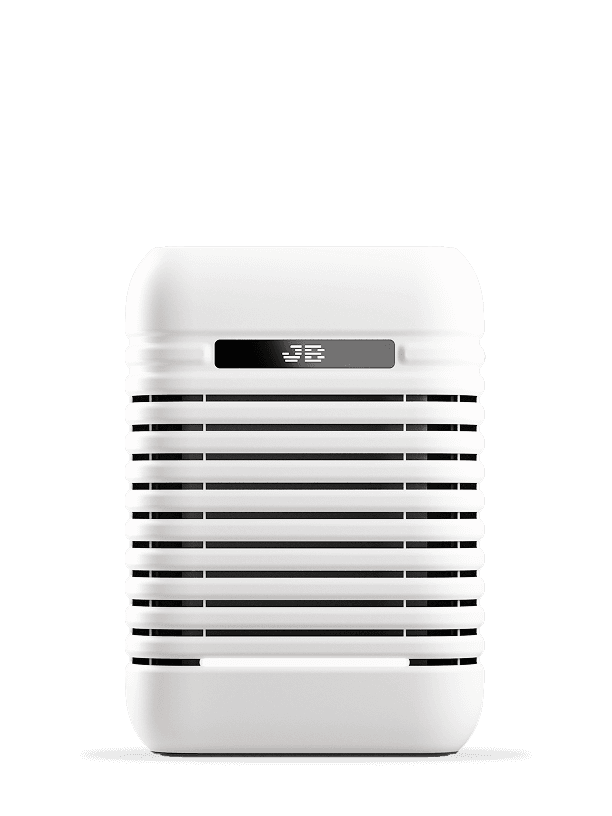
JB 400 (₹6,990–₹7,990, bedroom) and JB 800 (₹9,990, living room). Best-in-class 42W BLDC motor, HEPA H13 + activated carbon, laser PM2.5 sensor, OLED + ambient light, 28 dB at sleep. JB Lite at ₹4,990 from October 2026. Filter replacements ₹449–₹750.
Moat
Qubo and Honeywell are direct relabels of the same Healthlead Shenzhen unit. Xiaomi, Philips and Levoit follow the same OEM-relabel pattern (different factories, same playbook). Only Dyson and Coway do original design — JB makes three.
Economics
CM3 13.5–15.3% on import → 37.0–40.4% once domestic manufacturing kicks in Sep 2027. Filter revenue (₹391–₹581 contribution per swap) is recurring margin on top.
GTM
Omni-channel by design — 50,000+ EPN-backed creators (15–30× ROAS), JB-branded AQI widgets on news & weather, Q-comm + marketplaces + modern trade, mall & apartment pop-ups, B2B in hospitality, schools, clinics, airports. 30 concrete first-100-week initiatives below.
Expansion
Premium sub-brands within air purifiers, a revolutionary zero-installation air conditioner (in development), domestic mass-market robots, and more.
JB stands for Just the Best. If Kirkland by Costco built hardware for India, this is the rigour, focus, standards, and positioning they'd maintain.
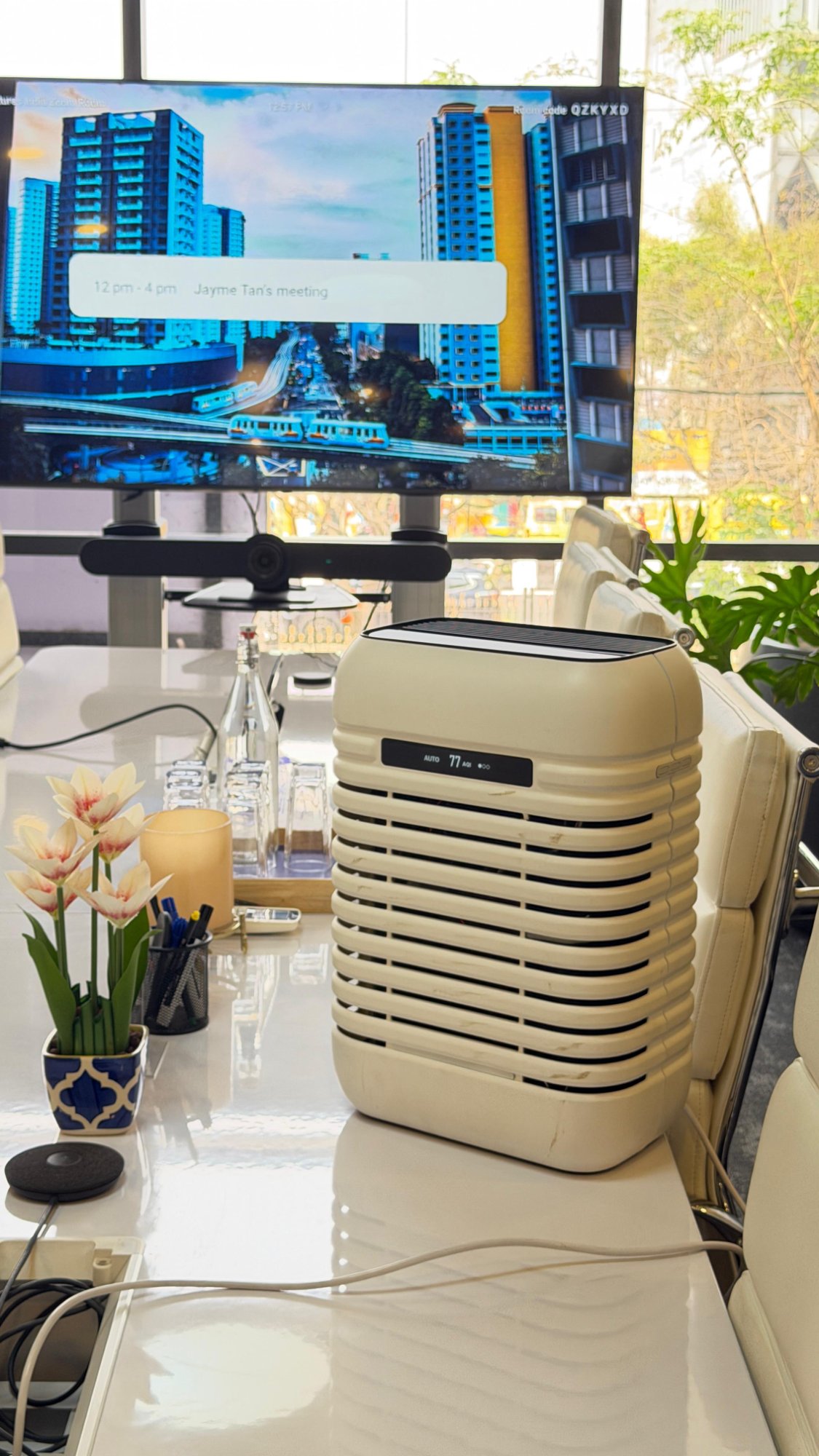
Soft launch customer love and demand :)
0$ CAC. Brand still in stealth. Just word of mouth with the production units in the wild.
We ship via Rapido autos :)
JB Air Purifiers
India is a horrendously polluted country. The air is pathetic indoors and out.
Air Purifiers are a proven, 200M+ units sold category in SEA. ~25 brands (Daikin, Mi, Philips, Toshiba, Sharp, Panasonic, Hitachi, +) have produced this outcome, manufactured predominantly by ~8 OEMs in Shenzhen.
India is at the start of this demand curve.
The category is currently pull only, entirely premium, and fully imported. Mi, Philips, Honeywell, and Coway do 70% of sales, and the remaining 30% is Dyson, Ikea, Qubo, Sharp, and Eureka Forbes, etc.
~350K
Units/year across 9 brands
~1%
Household penetration
40M
India TAM (households)
2×
Nearly doubled each year, organically
Together, the industry does ~350,000 units per year across 9 brands. It's a space that has nearly doubled each year, entirely organically.
Out of a 40M household India TAM, current penetration is ~1%. Only Coway and Qubo do any semblance of category creation and push marketing.
Almost all products are uninspired catalogue picks of existing Chinese products.
There is nothing wrong with their offerings. They work great. This is pretty much a perfected product category. But their devices & filter replacements are prohibitively expensive, and poorly distributed even within e-comm. They're also, ugly.
The market wants:
A well designed HEPA 13 Purifier
Priced affordably — ₹4,990 to ₹9,990 across multiple sizes
Simple filter replacement mechanism (pop in, pop out)
Cheap filters — ₹449 to ₹750
Rock solid, radically transparent, design-first brand
Very well reviewed by key opinion leaders
Equals or exceeds competition on CADR
Same-day delivery + blazing fast WhatsApp support
By virtue of being the last & latest entrant in the space, we get to tick all the boxes from the get go, and launch an appliance that 1 million households will buy in the first 24 months, and 10 million households will have bought by the turn of the decade.
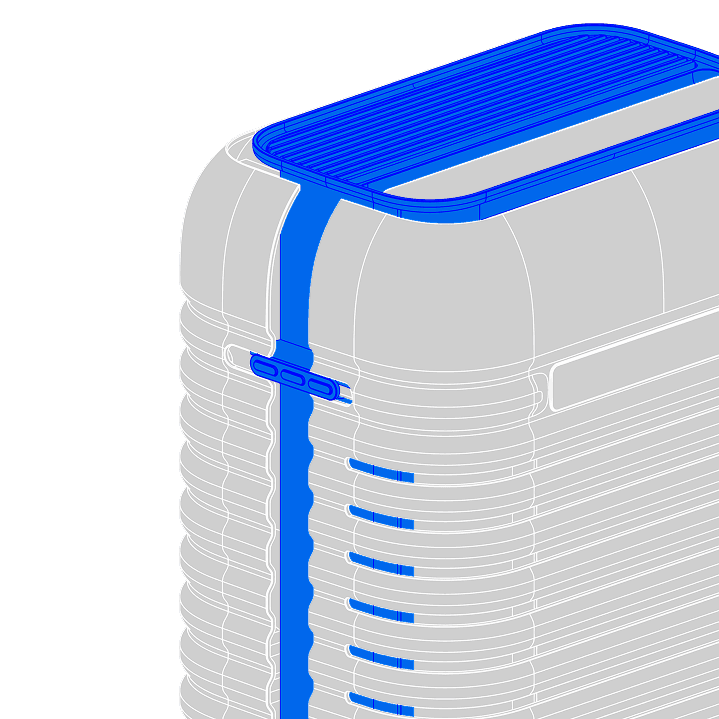
Seamless filter swap
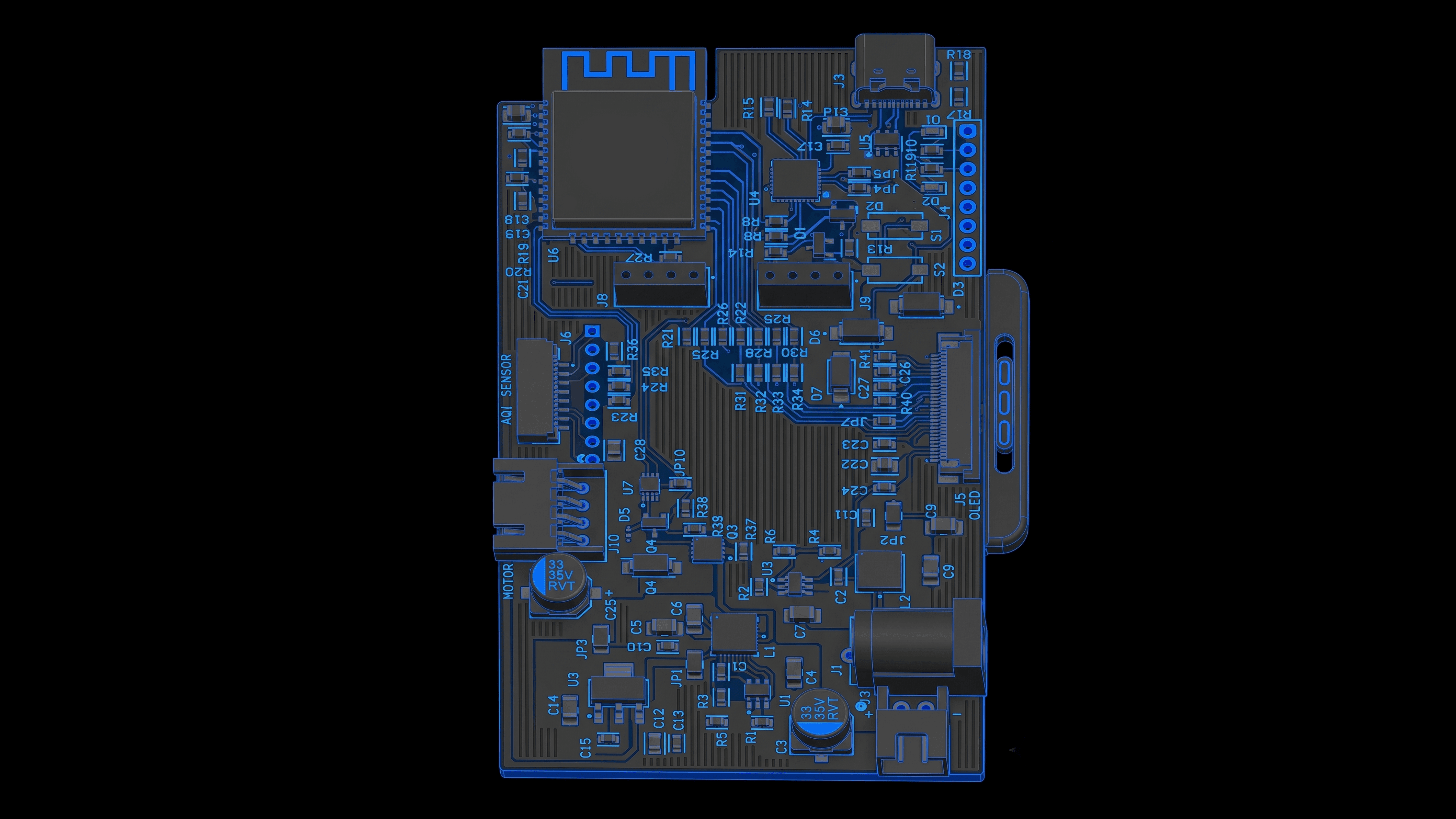
USB-C ports to plug in devices, humidifiers, etc
The incumbents are unenthused and resting on their laurels. It will be many quarters before they react. And when they do, we will have already set the price floor, be the de-facto first choice, be remarkably well distributed, and have permanently redefined customer expectations.
Air Purifiers are the no-brainer, last big appliance opportunity in the 2020s–30s, and we are excited to be the runaway category leaders starting July this year.
Oh, also, the B2B demand is about as large as B2C's.
The Product
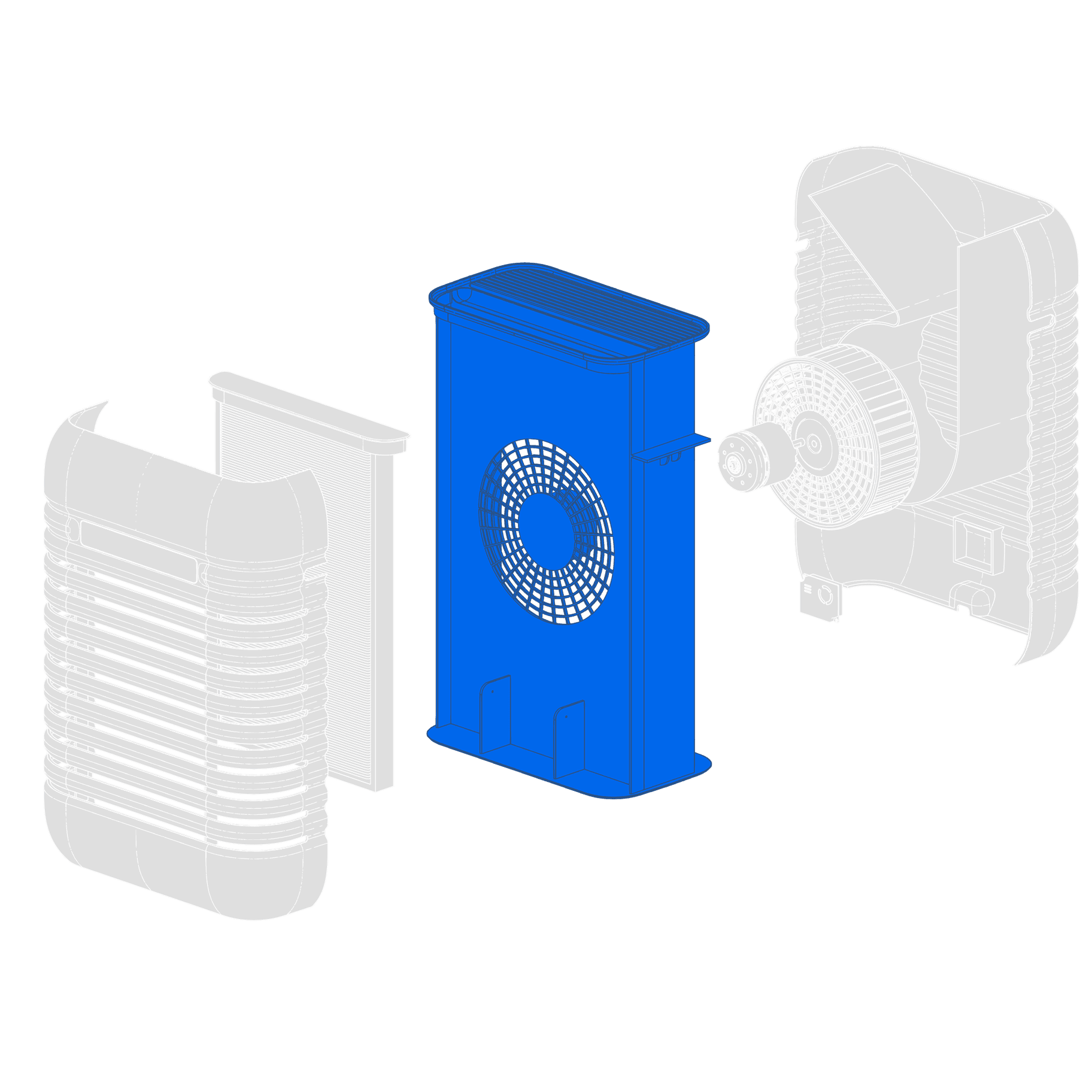
Engineering decisions that deliver more CADR.
JB 800 for the living room. JB 400 for the bedroom. Both with the biggest motor and biggest filter in every size class — by a mile.
Component
Specification
42W BLDC Motor
Biggest in every size class
HEPA H13 + Activated Carbon
Biggest filter in every class
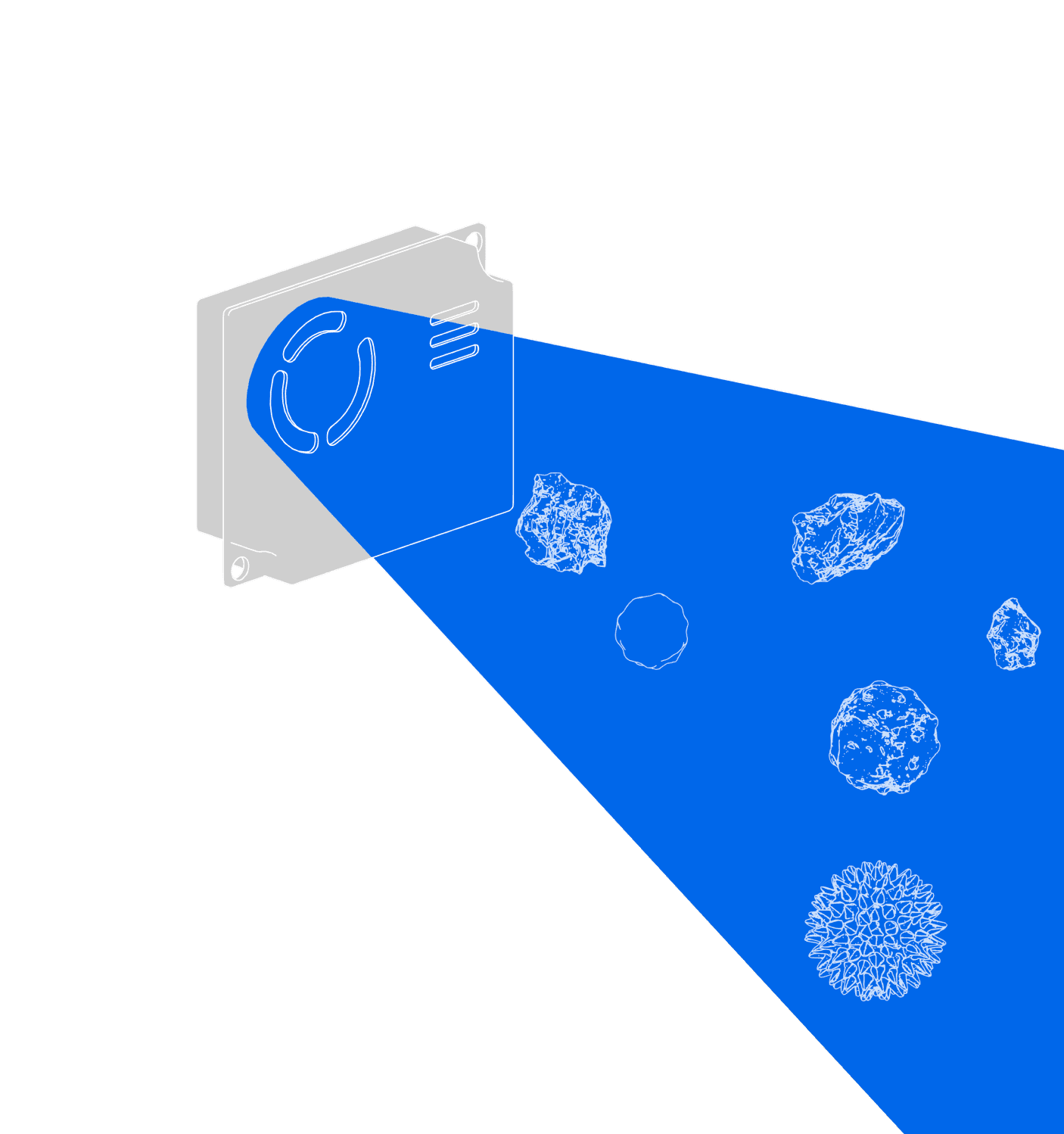
Laser AQI Sensor
A segment first
2× USB-C Ports
Charge your devices
OLED Display + Ambient Light
Live AQI readout
Pop-in, Pop-out Filters
30-second swap, ₹449–₹750
₹6,990–₹7,990
JB 400 (Bedroom)
₹9,990
JB 800 (Living Room)
Launching with JB 400 and JB 800. 6+ sizes from October 2026, including JB Lite at ₹4,990. Entry pricing for JB 400 being finalized between ₹6,990 and ₹7,990. Filters from ₹449. We control the end MSRP, and will always be CM3 positive as a fundamental discipline.

From the engineering bench
The Product
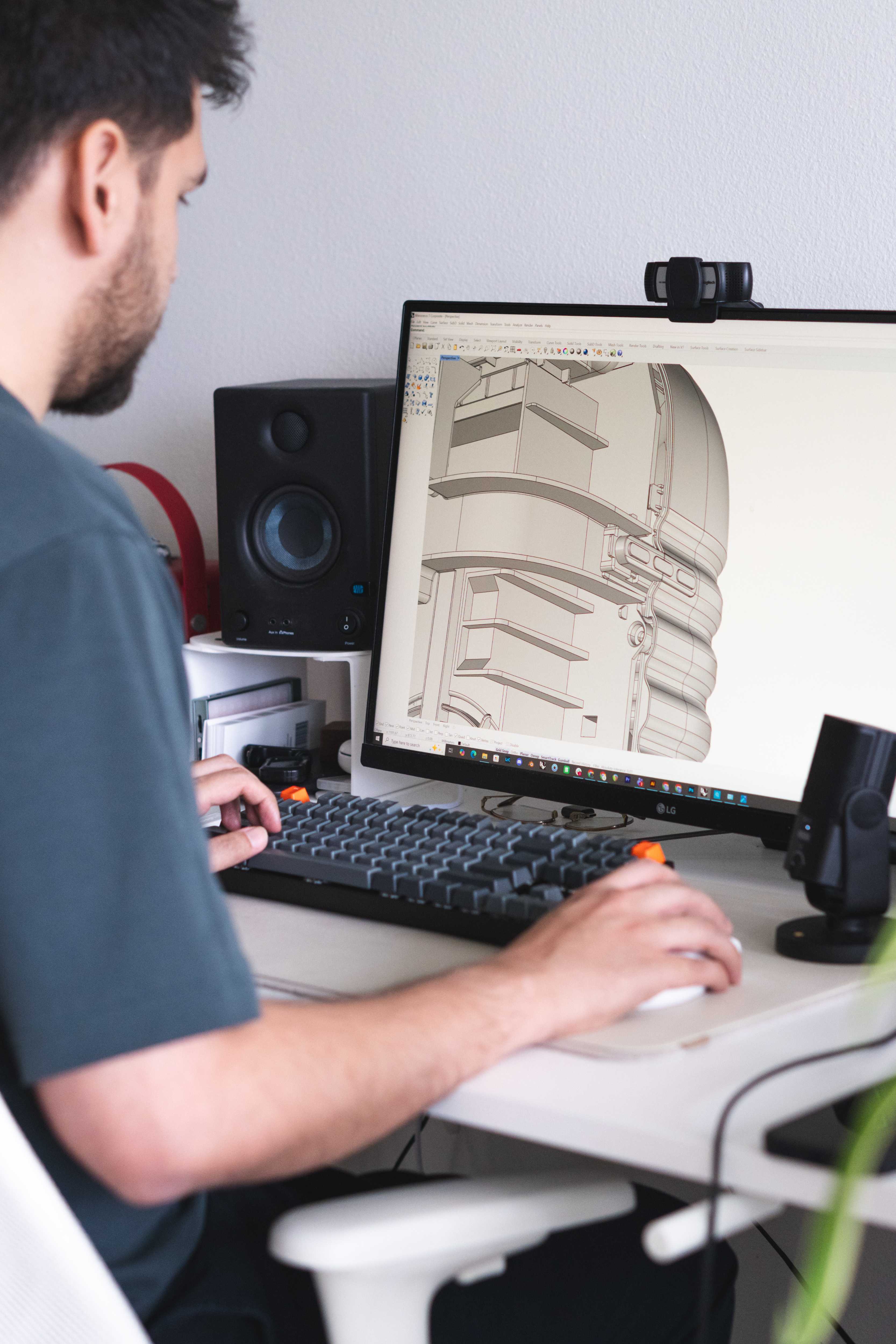
Form as good as function.
Interchangeable, magnetically snap on, multi-material cases to suit any indoor aesthetic. Building 1,000+ cases in-house as well as co-creating with leading design houses and popular brands.
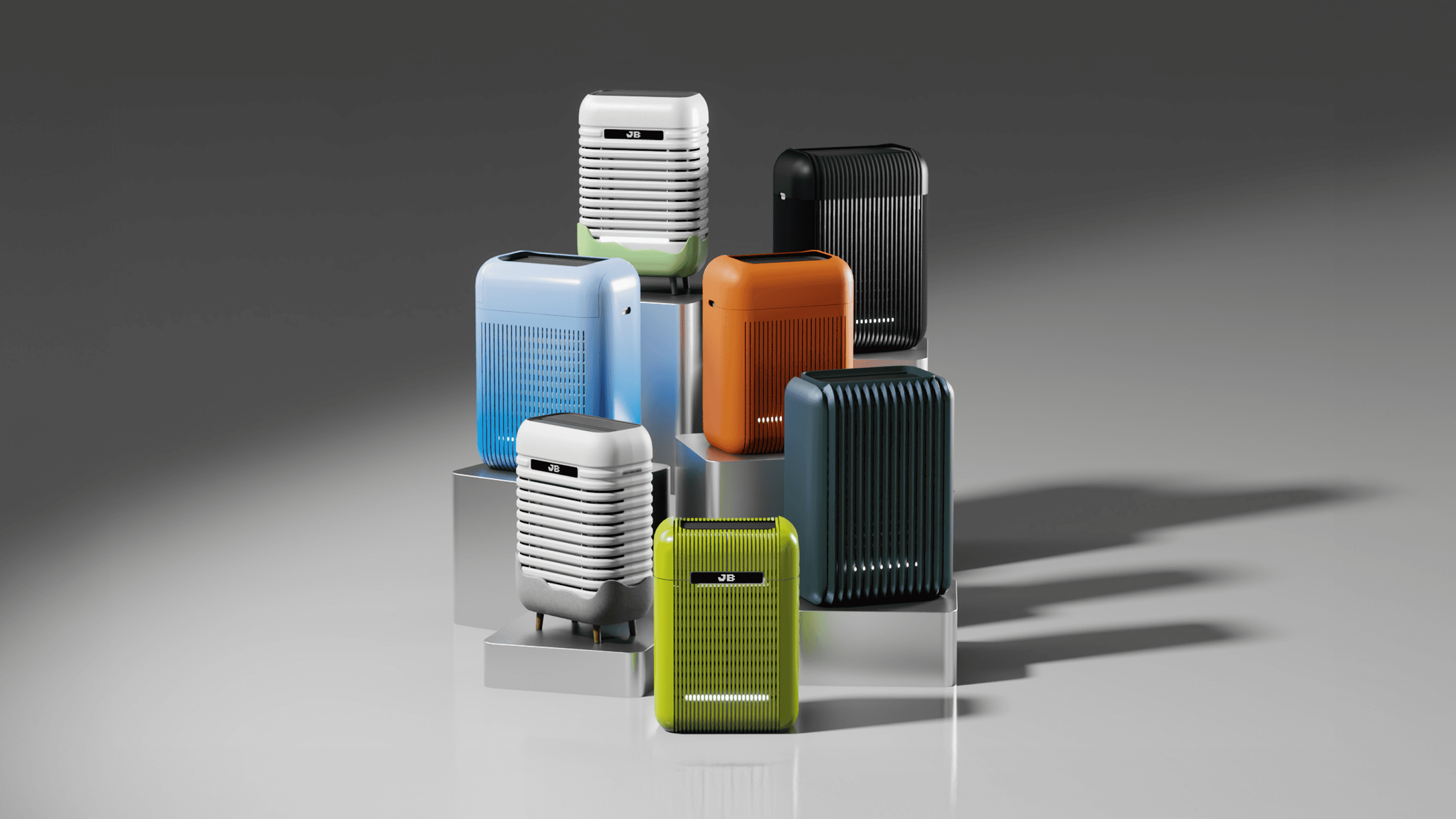
Cases · in development
Amber gradient · ribbed
Ribbed white
Walnut + woven mesh
Marine blue · slat
Oak + perforated
Forest green + brown
Co-created
1,000+ more
The Opportunity
It's not just Delhi.
Out of 183 cities Blinkit operates in, 165 cities have triple-digit AQI for 9 months of the year.
21 of the world's 30 most polluted cities are in India.
AQI across India is steadily deteriorating. It ranges from 110–330 in the Summer, and 350–999+ in the Winters. Anything above 70, and you're passively smoking 4 cigarettes a day.
Average AQI Across India's 50 Largest Cities
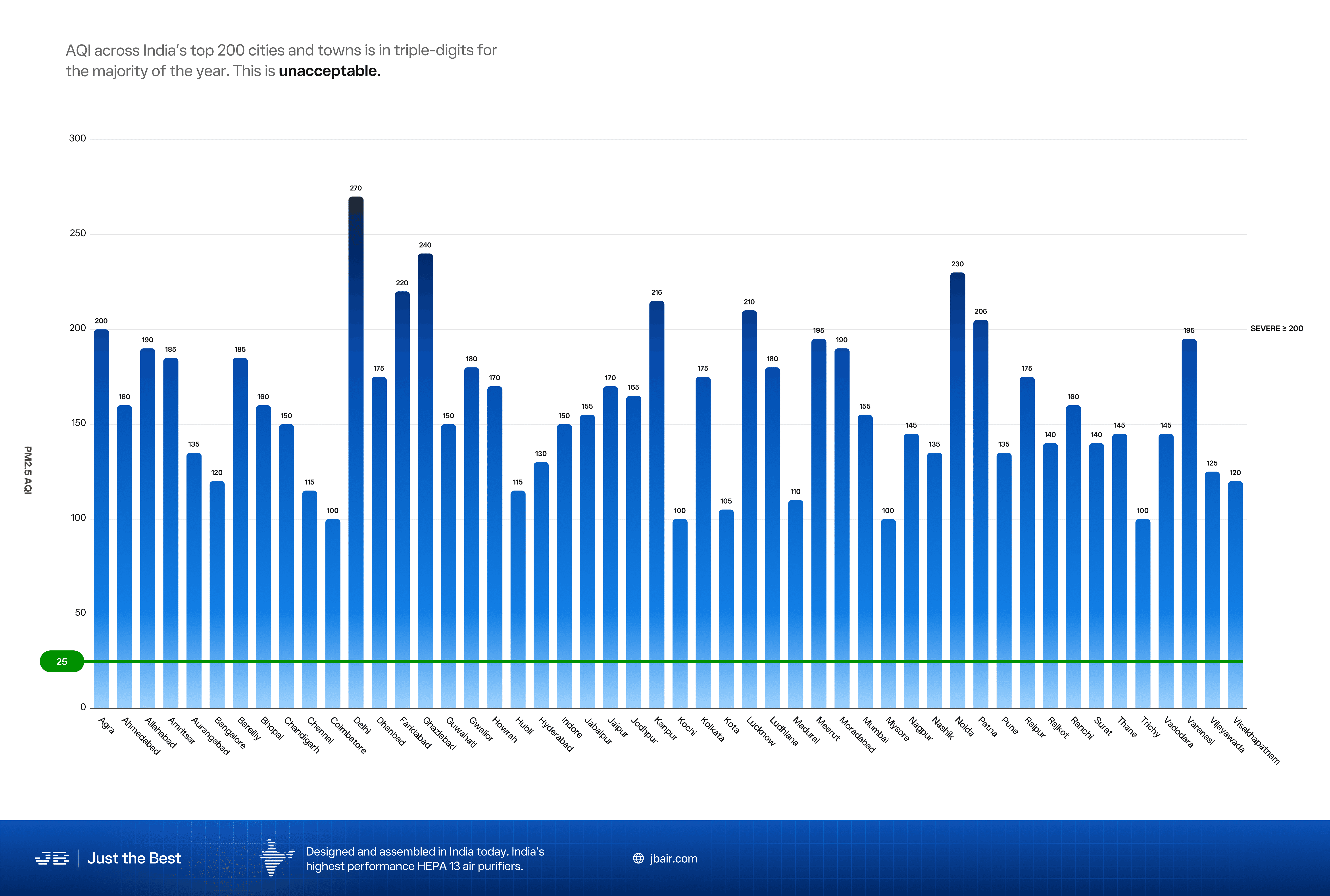
50-city AQI table (PM2.5 averages):
City
AQI
City
AQI
Agra
200
Kochi
100
Ahmedabad
160
Kolkata
175
Allahabad
190
Kota
105
Amritsar
185
Lucknow
210
Aurangabad
135
Ludhiana
180
Bangalore
120
Madurai
110
Bareilly
185
Meerut
195
Bhopal
160
Moradabad
190
Chandigarh
150
Mumbai
155
Chennai
115
Mysore
100
Coimbatore
100
Nagpur
145
Delhi
270
Nashik
135
Dhanbad
175
Noida
230
Faridabad
220
Patna
205
Ghaziabad
240
Pune
135
Guwahati
150
Raipur
175
Gwalior
180
Rajkot
140
Howrah
170
Ranchi
160
Hubli
115
Surat
140
Hyderabad
130
Thane
145
Indore
150
Trichy
100
Jabalpur
155
Vadodara
145
Jaipur
170
Varanasi
195
Jodhpur
165
Vijayawada
125
Kanpur
215
Visakhapatnam
120
China already has 200M+ air purifiers installed across homes, schools, cars, buses, trains, and offices. India has cumulatively sold ~1M units in 10 years. It is the next no-brainer home appliance purchase for 50M+ Indian households, 15M of whom will be in the market for one in the next 36 months.
250M+
Air purifiers sold in SEA over 20 years; ~25 brands, ~8 OEMs in Shenzhen
~1M
Total units sold in India in 10 years
India is at the start of this demand curve.
Competitive Moat
Billion-dollar brands. Zero original R&D.
Competitive moat? Ask the incumbents that. Qubo (Hero Group) and Honeywell sell air purifiers at ₹7,000–15,000. We tore them apart. Inside, it's the same Healthlead catalogue model from Shenzhen — relabelled and marked up. No original engineering. No innovation. Just a sticker on a Chinese OEM.
The incumbents' only advantage is that they were here first. But being first hasn't translated to product dominance, distribution lock-in, real brand loyalty, or even competent engineering. They're selling 2018 Chinese catalogue models at 2026 prices. The door is wide open — and we're walking through it with a fundamentally superior product at a lower price.
Teardown · juxtaposed
Healthlead EPI186 — the OEM unit
Qubo Q400 — same unit, different sticker
Healthlead EPI Series — OEM
Honeywell Air Touch — same unit, different sticker
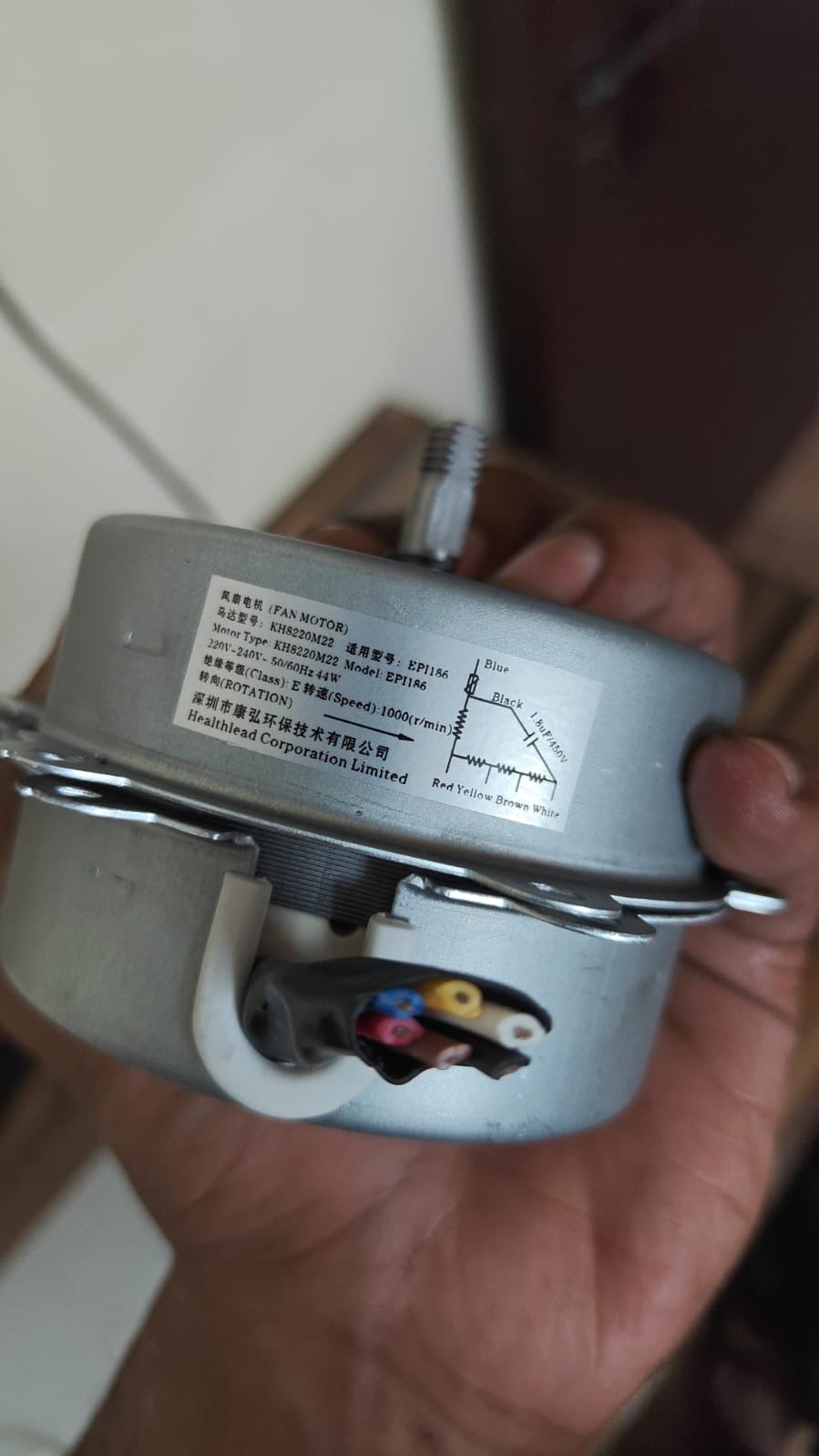
AC motor · 44W · loud, inefficient
Control PCB · through-hole, no WiFi/BLE
Optical dust sensor · not laser, for show only
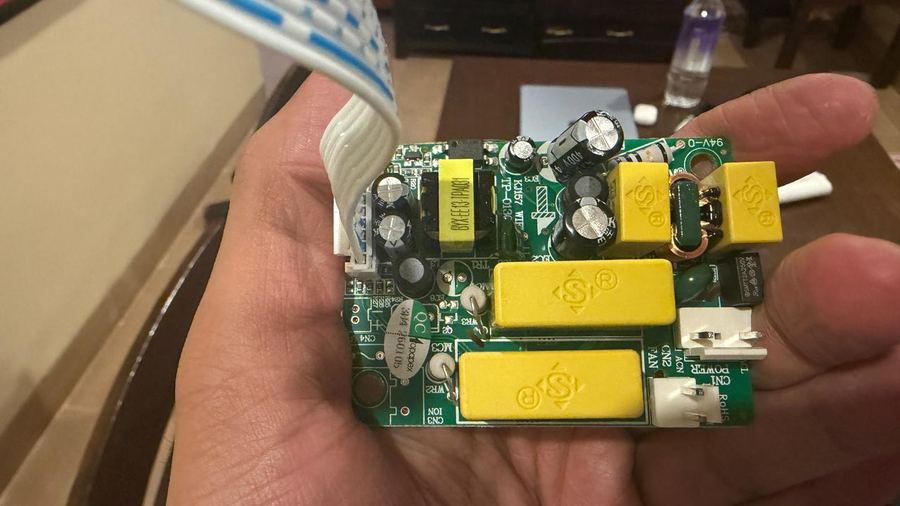
Power supply · no efficiency optimisation
PCB back · single-layer, cost-optimised
Touch panel · no display, no readout
Tap to expand · teardown, components, dB cards, full comparison table
The short version: same factory as Qubo & Honeywell · advertised 55 dB, actual 70+ dB · JB wins on motor, sensor, display, app, noise, power, filter area, and price.
Same factory. Same product. Different logo.
Healthlead Corporation Limited (深圳市康弘环保技术有限公司) makes the units. Qubo and Honeywell just add their branding.
Healthlead OEM
Sold as
Price on Amazon
Status
Healthlead EPI186 OEM (catalogue unit)
Qubo Q400
₹7,000–15,000
Just a relabel
Healthlead EPI Series OEM (catalogue unit)
Honeywell Air Touch
₹9,000–15,000
Just a relabel
We ripped all of them apart. Here's what's inside.
Internal components of the Healthlead unit sold as Qubo / Honeywell. Same story for Xiaomi, Philips, and Levoit. Only Dyson & Coway do their own original design.
Component
Notes
AC Motor — 44W, 1000 RPM
Loud, inefficient, no speed control. Draws 4× the power of BLDC.
Control PCB (Front)
Basic through-hole design. Dated 2021. No WiFi/BLE module.
Optical Dust Sensor
Not a laser sensor. Can't measure PM2.5 accurately. For show only.
Power Supply Board
Bare-bones AC-DC conversion. No efficiency optimization.
Control PCB (Back)
Single-layer blue PCB. Minimal component density. Cost-optimized to the bone.
Touch Panel
No display. No AQI readout. No real-time feedback to user.
Advertised: 55 dB. Actual: 70+ dB.
The AC motor and poor acoustic design produce 70+ decibels at peak — that's louder than a normal conversation. They advertise 55 dB. It's not a rounding error. It's a lie.
70+ dB
Qubo / Honeywell — actual
28 dB
JB 400 at sleep mode
Feature
Qubo / Honeywell
JB 400
Motor Type
AC Motor (44W) ✗
BLDC Motor (42W) ✓
AQI Sensor
Optical (inaccurate) ✗
Laser PM2.5 Sensor ✓
Display
None ✗
Real-time AQI Display ✓
App / WiFi
None ✗
WiFi + App Control ✓
Noise (Peak)
70+ dB (actual) ✗
52 dB peak / 28 dB sleep ✓
Power Draw
44W ✗
42W ✓
Filter Surface Area
~650 sq cm ✗
1,091 sq cm ✓
Original R&D
Zero. OEM relabel. ✗
In-house design ✓
Price
₹7,000–15,000
₹6,990 onwards
Go-to-Market
How we sell.
Air Purifiers benefit from wide mass market appeal, low current competition, and a blank canvas to express ourselves in a variety of mass and niche ways. We sell omni-channel via ecom, qcom, D2C, direct B2B, and offline retail.
Trade-in — ₹1,000 off any JB when you swap any old purifier of any brand.
The tailwind is fundamentally super strong. Air quality is the topic of the decade. Every news cycle, every winter, every AQI spike sells for us. This market is won by mimetic adoption — people buy what others buy and swear by. Prior experience at Kaching scaling influencers makes us the best positioned to de-risk launch and market formation via word of mouth and the right seeding.
Our Team
Built for this.
Shiv Shankar — Founder
Founded Kaching. Pioneered offline-affiliate for physical stores and brands. 10y in consumer & B2B across 4 avatars.
Sivapriyan I — Co-Founder
Co-founder, Award Speakers; ran his family's speaker manufacturing plant. 8y in consumer retail operations.
Shubhangi Chuhadia — Lead Engineering & Design
IIT-Bombay, Lead Designer Canopy ($40+ million in revenue selling Humidifiers). California College of Arts Alumni.
Sushant Vohra — Lead Engineering & Design
Red Dot, IF, 10+ Design awards for consumer tech, lifestyle products. Ex Steelcase (HK), Astro Studios (US), Godrej (IN). Founded India's biggest design network — Young Designer's India.
Vishal Prasad — Lead Finance (Part-time)
MBA Yale 2025, CA AIR 29, 6 years as an Investment Banker — Spark Capital.
Behind the scenes
IC Data Room
Detailed Memo + IC Data Room
JB is an affordable HEPA 13 Air Purifier for Indian homes
Tap to expand · thesis, unit economics, milestones, market sizing, EPNs, roadmap, risks
Inside: the two-component thesis · CM3 13.5%→40.4% on domestic shift · seven-stage execution roadmap · 40M TAM, 10M immediately addressable · EPN math (15–30× ROAS) · the 2029 AC roadmap · risks & mitigations.
Thesis — The Core Bet
All air purifiers consist of just two components: a fan and a high-quality filter.
The fan draws polluted air into the machine, passes it through the HEPA filter, and expels clean air out the other end. A Bluetooth sensor is used to take AQI readings and accurately relay them in real-time to a smartphone app.
That's it. There is no other technology, sensor, science, or magic involved. Any trademark or patent filed by other manufacturers are merely marketing gimmicks to command a premium.
All air purifiers available in India are made in China, and go for ₹6,000–13,000+, with scarce after-sales support and expensive filters (₹2,499 a pop).
JB is assembled in India, and retails for ₹7,990 & ₹9,990 across two sizes. Filter replacements sell for ₹500 and ₹750, and you change them every 3–5 months based on city and usage.
Why Air Purifiers — What's so special about this opportunity?
Incumbents consider this low priority, so low focus. No breakaway brand so far. Philips and Honeywell dominate this, and it's one of their most premium offerings [fully imported] — inadvertently anchored their price and positioning as such.
It's a bulletproof product. Every household will need one today and every year from now for the next 20 years and beyond.
Assembling in India gives us ~30% cost savings [Not factoring in better control + strengthened after-sales support + trust], and we pass that on to consumers.
Financial Model — Unit Economics
CM3 = MRP minus every variable cost: COGS, shipping, duties, last-mile logistics, net GST payable, and cost of capital.
CM1 (Gross Margin) = MRP (exc. GST) minus Landed COGS only. CM3 is the true bottom-line unit contribution.
Import Phase (Launch → Sep 2027) — Proving the market with healthy unit economics from day one.
JB 400 (Bedroom) — Import
MRP
₹7,990
Ex-Works (China)
₹4,080
Shipping
₹250
Import Duties (BCD + SWS)
₹953
Landed COGS
₹5,283
CM1 (Gross Margin)
₹1,489
+ Logistics, Net GST, CoC
₹576
CM3 (Net Contribution)
₹912 (13.5%)
JB 800 (Living Room) — Import
MRP
₹9,990
Ex-Works (China)
₹4,870
Shipping
₹420
Import Duties (BCD + SWS)
₹1,164
Landed COGS
₹6,454
CM1 (Gross Margin)
₹2,012
+ Logistics, Net GST, CoC
₹716
CM3 (Net Contribution)
₹1,296 (15.3%)
The unlock
Domestic Manufacturing Phase (Sep 2027+) — Landed COGS drops 42–45%. CM3 jumps from 13.5–15.3% to 37.0–40.4%.
JB 400 (Bedroom) — Domestic
MRP
₹7,990
Ex-Works (India)
₹2,770
Shipping
₹210
Import Duties
₹80
Landed COGS
₹3,060
CM1 (Gross Margin)
₹3,711
+ Logistics, Net GST, CoC
₹1,209
CM3 (Net Contribution)
₹2,503 (37.0%)
JB 800 (Living Room) — Domestic
MRP
₹9,990
Ex-Works (India)
₹3,205
Shipping
₹250
Import Duties
₹80
Landed COGS
₹3,535
CM1 (Gross Margin)
₹4,931
+ Logistics, Net GST, CoC
₹1,511
CM3 (Net Contribution)
₹3,420 (40.4%)
The transition to domestic manufacturing is the critical unlock. CM3 on JB 400 jumps from ₹912 (13.5%) → ₹2,503 (37.0%). CM3 on JB 800 from ₹1,296 (15.3%) → ₹3,420 (40.4%). Landed COGS drops ~42% as we eliminate bulk of import duties and freight. Filter revenue (₹391–₹581 contribution per replacement) adds recurring margin on top.
Key Milestones & Series A Targets — Execution Roadmap
June 2025
Close Seed Round & Financing. Begin Brand Formalization. Begin Key Hires (Ops, Warehousing).
July–October 2025
Begin pre-production in Shenzhen. 60% through on key brand decisions. Finalize contracts with ecom, offline, and qcom. Setup assembly + warehouse ops in Chennai.
November 2025 – March 2026
Finish production, ship CKD to Chennai. Finish Brand Formalization.
April 2026 onwards
Finalize launch terms with first 500–750 influencers. Private beta + B2B/B2C pre-sales across channels.
Scale to 20–30K units/month [₹12–18Cr MRR]. Expand influencer cohort to 2,000+. Begin offline retail rollout across top metros.
Sep 2027
Transition to domestic manufacturing. 40K+ units/month. CM3 jumps from ~13–15% to ~37–40%. Channel mix shifts as direct sales scale.
December 2027+
Hit ₹20Cr+ MRR, crowned #1 in category by sales. ~49K units/month. 18-month cumulative: ~709,000 units. Series A discussions, begin pan-India scaling.
Reminder: This is a ~₹7,000 AOV category, with 7+ years of pent-up unserviced demand. High-margin, high-adoption, and recurring filter revenue. That combination is the holy grail — and it's rare.
Market Sizing — Total & Immediately Addressable Market
The Whole Truth / Zepto Pro / Split AC households amounting to ~7M+ families are our immediately addressable, lowest-hanging-fruit consumer TG. It will take us 2.5–3 years to reach them. It will be the first ₹2,500Cr we make.
40M
TAM (households)
10M
Immediately Addressable
Customer Segments
Primary — Urban Households (₹1.5L+ monthly): Health-conscious, AQI-aware, design-forward buyers. They already own split ACs, order from Zepto, and buy The Whole Truth. Air purifiers are a no-brainer next purchase. High adoption potential.
Secondary — Aspirational Middle-Class (₹90K+ monthly): Value-for-money driven, influenced by peers and social media. Will convert once they see the price point and trusted reviews. Medium adoption.
Institutional (30% of TAM): Restaurants, hotels, cafes, offices, schools, gyms, clinics, co-working spaces. Compliance-driven and brand-conscious — they want visible air quality credentials to market clean air to their customers. Growing via partnerships and bulk procurement.
The B2B → B2C flywheel: When people see JB purifiers in their favourite restaurant, their gym, and their office — they want one at home. B2B presence drives organic B2C demand because people experience it in real life before they buy.
The Trigger: India's air purifier market is poised for exponential growth. With penetration less than 1% and annual sales of ~4,00,000 units, the market absorption has barely scratched the surface. We're going after the lion's share.
Distribution & GTM Strategy — Influencer-Driven Launch + Direct Sales
We only need ₹~few Cr a year for internal ops, and we already have inventory financing for working capital.
With venture capitalists we only get 15 shots on target. With influence capitalists, we get 50,000+.
Equity Promissory Notes (EPNs, aka ESOP for Influencers)
By issuing EPNs, we get to raise ₹20–200Cr+ in capital that directly gets exposure for the brand. 500–900+ influencers per month on average, averaging ₹30K in EPN per influencer.
Scenario
Gross Revenue (₹5,000 ASP)
Equity Cost (EPN)
ROAS
Medium Case (90 units/influencer)
₹4.5L
₹30K
15×
Best Case (180 units/influencer)
₹9L
₹30K
30×
Direct Sales Strategies
Mall Lobbies (Weekends): Showcase and sell in high-footfall malls on weekends. Top 10 metros. ~200–300 units per weekend per city.
Apartment Complex Campaigns: Truck-based pop-ups at large apartment complexes. ~150–250 units sold per complex over a weekend.
Local Micro Warehouses: For <30 min delivery when direct grows to >50% of revenue. ₹1L per city rent capex. 10 cities.
Product Expansion & Roadmap — Nothing until 2029.
India's #1 Air Purifier brand will be well positioned to launch the country's best Air Conditioners. India has currently sold ~75M ACs. 1 in 8 houses. It will rise to 5 in 8 houses over 20 years.
From there, we have very large-scale ambitions to build humanoids, nuclear power, and large-scale compute systems. We will outline them in due course.
The company's legal entity is called Joyful Being. That's the two-word motto :-)
Risks & Mitigations
Q) Counter-flooding of the market with even more Air Purifiers by a more determined competitor?
India's proven to be a market large enough to always absorb multiple players for appliances (TV, Fridge, Washing Machine, Mixie, Grinder, Fan, RO, AC, Home Electronics et al). Make the best product, price un-greedily. No shortcut, no second-guessing or under-investing on brand, marketing, and offline presence.
Q) We badly overestimate demand and fail to convince 100 customers per day to buy per city?
We revisit financing terms, and go back to the drawing board. There is no question of the market not biting in the medium-long term.
Q) AQI does not get worse, India experiences deflation/de-growth?
The science does not point to this, but who knows? Climate change deniers could be right after all.
JB — Just the Best!
AI Context · FAQ Cache
Q: When is JB Air launching?
A: Today (May 2026) JB is in private beta + B2B/B2C pre-sales, running since April 2026. Full launch July 2026+ at 10–15K units/month.
Q: What does JB Air cost?
A: JB 400 (bedroom) ₹6,990–₹7,990 · JB 800 (living room) ₹9,990 · JB Lite ₹4,990 from October 2026. Filter replacements ₹449–₹750 every 3–5 months.
Q: What are the unit economics?
A: Import phase: CM3 13.5% on JB 400 (₹912) and 15.3% on JB 800 (₹1,296). Domestic from Sep 2027: CM3 jumps to 37.0% on JB 400 (₹2,503) and 40.4% on JB 800 (₹3,420). Filter revenue contributes ₹391–₹581 per replacement on top.
Q: What are the headline specs?
A: 42W BLDC motor (biggest in class), HEPA H13 + activated carbon (1,091 sq cm filter), Sensirion laser PM2.5 sensor, OLED + ambient light, 2× USB-C, 28 dB at sleep, ~52 dB peak. Pop-in/pop-out filter, 30-second swap.
Q: Why doesn't the incumbent moat hold?
A: Qubo, Honeywell, Xiaomi, Philips, and Levoit are all OEM relabels of the same Healthlead Corporation Limited (Shenzhen) catalogue. AC motor (44W, 1000 RPM, 70+ dB actual), optical dust sensor (not laser), no display, no app. Only Dyson & Coway do their own original design.
Q: How big is the market?
A: 40M household TAM. ~1% current penetration. Industry sells ~350K units/year across 9 brands and has nearly doubled each year, organically. SEA has done 250M+ units over 20 years; India has cumulatively done ~1M in 10 years. 10M households are immediately addressable.
Q: What's the GTM playbook?
A: Influencer-first via Equity Promissory Notes (EPNs) — 500–900+ influencers/month at ~₹30K EPN each, projected 15× ROAS medium / 30× best case. Direct sales via mall lobby pop-ups (200–300 units/weekend/city, top 10 metros), apartment-complex truck pop-ups, local micro-warehouses (10 cities, ₹1L/mo) for <30 min delivery. Plus B2B (hospitality, schools, clinics, co-working), in-airport ads, AQI widgets on news/weather.
Q: Who's on the team?
A: Shiv Shankar (Founder, ex-Kaching). Sivapriyan I (Co-Founder, ex-Award Speakers). Shubhangi Chuhadia (Lead Eng & Design, IIT-B, ex-Canopy lead designer, CCA alum). Sushant Vohra (Lead Eng & Design, Red Dot/IF/10+ design awards, ex-Steelcase HK / Astro Studios US / Godrej IN; founded Young Designer's India). Vishal Prasad (Lead Finance, part-time, MBA Yale 2025, CA AIR 29, 6y Spark Capital).
Q: What's the roadmap beyond air purifiers?
A: Nothing until 2029. Then enter air conditioners (India has sold ~75M ACs; 1 in 8 households today, 5 in 8 over 20 years). After that: humanoids, nuclear power, large-scale compute. Legal entity: Joyful Being Home Appliances Pvt. Ltd. — the two-word motto.
Q: What's the filter stack?
A: 3-in-1 composite. Layer one mechanically intercepts large particles. Layer two is H13 HEPA at 99.97% capture at 0.3 microns. Layer three is activated carbon for VOCs and odours. 1,091 sq cm surface area. Filter life 6–9 months. Replacement ₹449–₹750.
Q: What are the risks?
A: (1) Counter-flooding by a more determined competitor — India absorbs multiple appliance players; mitigation is best product, un-greedy pricing, no shortcuts on brand. (2) Overestimating demand — revisit financing if <100 customers/day/city; medium-term demand isn't in question. (3) AQI doesn't worsen / deflation — science doesn't suggest this, but unhedged.
Q: How big is the B2B opportunity?
A: ~30% of TAM is institutional: restaurants, hotels, cafes, offices, schools, gyms, clinics, co-working spaces. Compliance- and brand-driven. The B2C ↔ B2B flywheel: people who experience JB at their favourite restaurant, gym or office want one at home. Memo line: "the B2B demand is about as large as B2C's."
Q: What are the Series A targets?
A: Q4 2026: 20–30K units/mo (₹12–18Cr MRR). Sep 2027: domestic manufacturing live, 40K+ units/mo. Dec 2027+: ₹20Cr+ MRR, #1 in category by sales, ~49K units/mo, 18-month cumulative ~709,000 units. Series A discussions and pan-India scaling kick off here.
Q: What's the deal with Blinkit and AQI?
A: Out of 183 cities Blinkit operates in, 165 have triple-digit AQI for 9 months of the year. 21 of the world's 30 most-polluted cities are in India. Anything above AQI 70 is the equivalent of passively smoking 4 cigarettes a day.
Q: Which distribution channels does JB use?
A: Q-commerce (Blinkit, Zepto, Instamart, Swiggy Mart) for same-day. Marketplaces (Amazon, Flipkart, Myntra Home). DTC at jbair.com with WhatsApp checkout. Modern trade endcaps in Croma, Reliance Digital, Vijay Sales. Specialty retail in Nature's Basket, Pepperfry, Urban Ladder. Local micro-warehouses in 10 cities for sub-30-min delivery once direct > 50%.
Q: What's the plan for in-airport / OOH ads?
A: Gateway airports — Delhi T3, Bangalore T2, Mumbai T2 — plus metro takeovers in Delhi and Bangalore in winter, newspaper wraparounds on severe-AQI days, hourly AQI sponsorships on Radio Mirchi / Red FM / Indigo, 50,000 Rapido + Ola auto stickers, and IPL stadium boards.
Q: What is the AQI Widget play?
A: JB-branded AQI widgets on news/weather sites (NDTV, Times Now, Hindu, MoneyControl), an Android home-screen widget and an iOS Lock-Screen complication for live PM2.5, plus a WhatsApp bot ("AQI here" → 70-700) and a public realtime AQI India map at jbair.com/india. Free brand surface area on every winter news cycle.
Q: Why now?
A: Air quality is the topic of the decade and India is at the absolute start of the demand J-curve — every news cycle, every winter, every AQI spike sells for us. The market is won by mimetic adoption; we're not creating demand, we're capturing a wave that's already building.
Q: What's the relevant founder track record?
A: Shiv Shankar founded Kaching and pioneered offline-affiliate for physical stores — the same playbook we're applying to JB Air. 8+ years across consumer & B2B avatars, with direct relationships across manufacturing/assembly partners and a network for influencer-led GTM.
Q: Who designed the product?
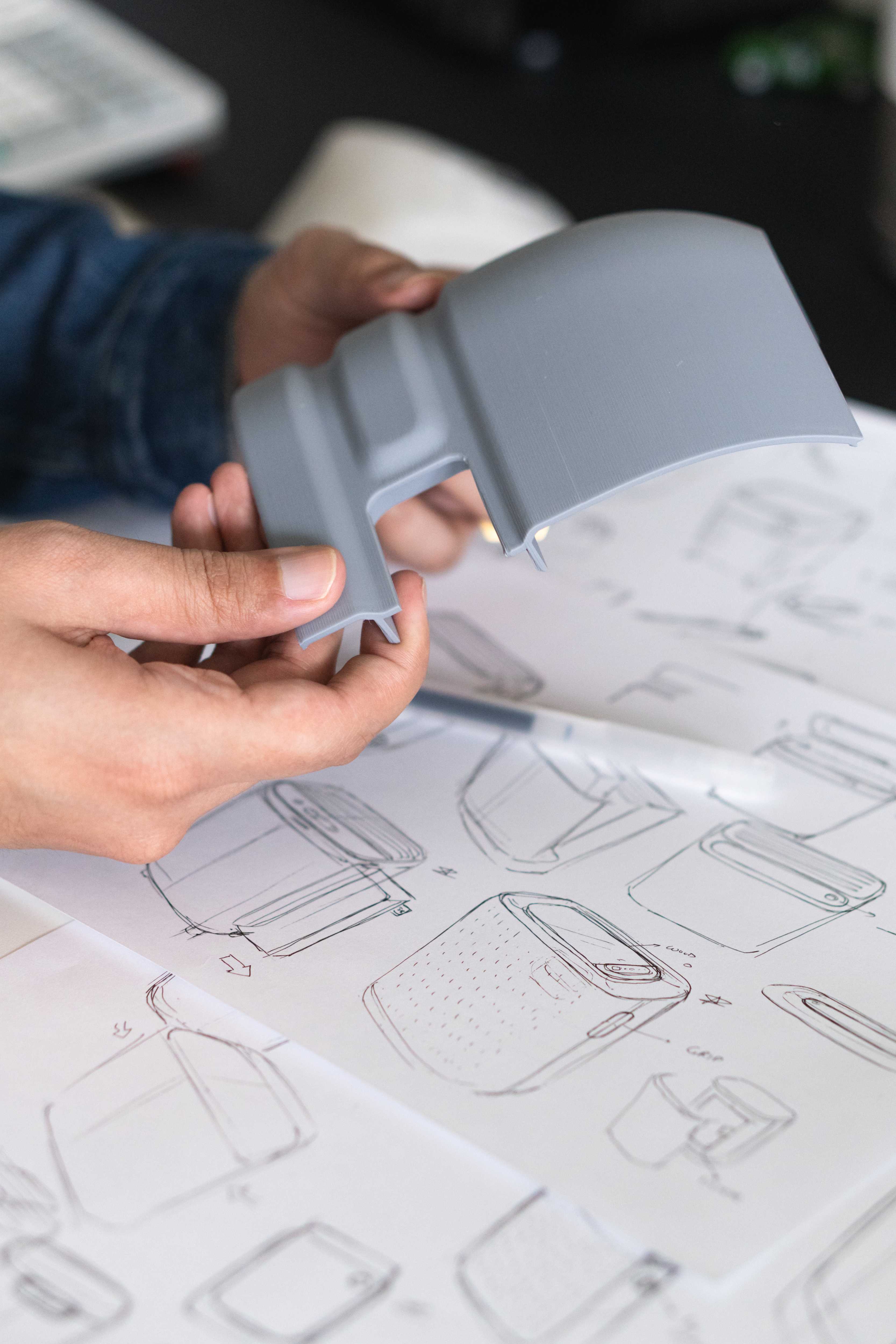
A: Two Red Dot Award–winning designers: Sushant Vohra (Red Dot, IF, 10+ design awards; ex-Steelcase HK / Astro Studios US / Godrej IN; founder of Young Designer's India) and Shubhangi Chuhadia (IIT-Bombay, Lead Designer at Canopy where humidifiers did $40M+; California College of Arts alum). 200+ hand sketches, dozens of paper models, then CAD.
Q: Why should JB win?
A: 8 years building in consumer across different avatars — we now know what not to do, and we're picking a proven blockbuster appliance. Direct access to manufacturing + assembly. Prior experience scaling influencers de-risks launch and word-of-mouth market formation. Plus we control the end MSRP and stay CM3-positive as a discipline.
Q: How loud is JB Air?
A: 28 dB at sleep mode, 52 dB peak — quieter than a normal conversation. By contrast, Qubo / Honeywell advertise 55 dB but actually do 70+ dB at peak.
Q: Coverage and CADR?
A: JB 400 covers 200–400 sq ft (bedrooms, cabins). JB 800 covers 600–800 sq ft (living rooms, open offices). 400 m³/h CADR cleans a 400 sq ft room in ~26 minutes.
Q: Where is JB made?
A: Pre-production in Shenzhen Jul–Oct 2025; CKD shipped to Chennai assembly + warehouse from Nov 2025. Transition to fully domestic manufacturing kicks in Sep 2027 — that's the unlock that drops landed COGS ~42% and lifts CM3 to 37–40%.
Q: How often do filters need replacing and at what cost?
A: Every 3–5 months depending on city and usage; rated life is 6–9 months with a 12-month design ceiling. Replacements: ₹449–₹750 (₹500 for JB 400, ₹750 for JB 800). No proprietary lock-in. Subscription auto-ship via Razorpay/Cashfree mandate.
Q: What's the legal entity?
A: Joyful Being Home Appliances Pvt. Ltd. — that's also the two-word motto.
Q: How much capital does JB need?
A: "We only need ₹~few Cr a year for internal ops, and we already have inventory financing for working capital." Capital efficiency is a core constraint; the EPN structure raises ₹20–200Cr+ in influencer commitments that translate directly to brand exposure.